Alive Inside the Lines: How Great Performers Find Real Truth in Scripted Words
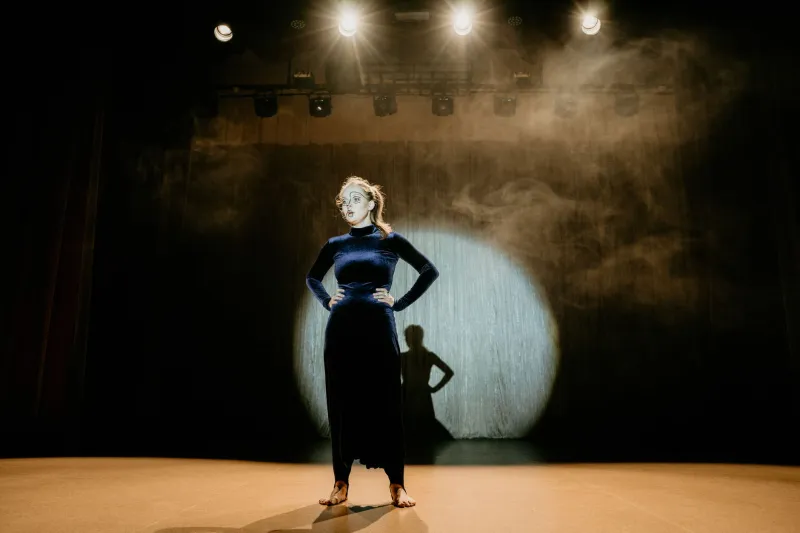
Here's something that doesn't get talked about enough: the moment an actor fully memorizes their lines is also the moment their real work begins. Most people on the outside imagine that learning the words is the job. But anyone who's spent serious time in a rehearsal room or on a film set knows that memorization is just the foundation—the actual craft lives in what you build on top of it.
There's a genuine paradox at play in every scripted performance. The dialogue is fixed. The blocking might be set. The camera angle is predetermined. And yet the audience needs to feel like none of that is true—like they're watching something unfolding in real time, something alive and unpredictable. Closing that gap between written and lived is one of the most fascinating challenges in all of performance art.
Why Scripts Can Feel Like Cages
Let's be honest about what a script actually is when you're staring at it on the page. It's someone else's words, written in someone else's rhythm, expressing emotions that may or may not map cleanly onto your own experience. For a lot of actors—especially early in their careers—that can feel suffocating. You know what the character is supposed to say. You know what they're supposed to feel. But knowing something and inhabiting it are completely different things.
The trap most performers fall into is treating the script as a destination rather than a map. They work toward delivering the line correctly instead of discovering why the character would say it at all. The result is technically accurate but emotionally hollow—and audiences feel that hollowness even if they can't name it. Something just doesn't land. The scene feels performed rather than lived.
This is where the real artistic tension lives. How do you honor the writer's words while also making them genuinely yours?
The Technique of Forgetting What You Know
Some of the most interesting work happening in acting pedagogy right now centers on this exact problem. Teachers and coaches across the country—from the Strasberg-influenced studios in New York to the more eclectic approaches you'll find in Los Angeles—have developed frameworks specifically designed to help performers un-know what they know.
One approach involves what some coaches call "active ignorance"—the deliberate practice of entering each scene as if the character doesn't yet know how the conversation ends. It sounds simple, maybe even obvious, but it's remarkably hard to execute when you've run the scene two hundred times. Your nervous system wants to anticipate. Your body starts moving toward the emotional beat before the words have even earned it.
Another method, popularized through various iterations of Meisner-based training, focuses on genuine moment-to-moment listening. The idea is that if you're truly responding to what your scene partner is actually giving you—not what you expect them to give you—the lines become almost secondary. They're just the vehicle. The real transaction is happening underneath.
You can see this in action if you watch something like Anthony Hopkins in The Silence of the Lambs or Viola Davis in pretty much anything she's ever done. There's a quality of genuine attention—a sense that they are actually receiving information and responding to it, not just executing a pre-planned emotional sequence. The words are memorized. The behavior is alive.
When Stage and Screen Demand Different Solutions
It's worth noting that this challenge plays out differently depending on the medium. On stage, a performer has the benefit of continuity—the scene builds night after night, and the emotional logic has time to settle into the body. Broadway actors often talk about a show "opening up" somewhere around the third or fourth week of a run, when the performance stops feeling like work and starts feeling like breathing.
Film is a completely different animal. You might shoot your emotional climax on day one, before you've had a chance to fully inhabit the character. You might do forty takes of a single line, which means forty attempts to arrive at the same emotional truth from a cold start. The discontinuity is brutal. It requires a kind of emotional agility that stage work doesn't necessarily develop on its own.
What the best film actors tend to develop is a personal toolkit for rapid emotional access—specific sense memories, physical triggers, or imaginative circumstances they can deploy quickly to get themselves to the right internal place. It's not manipulation for its own sake; it's practical craft. The camera is unforgiving. You either bring it or you don't, and you often only have a few shots to make it happen.
The Role of Personal Truth in Borrowed Words
Here's the part that often surprises people who haven't spent time thinking deeply about performance: the most effective technique for making scripted dialogue feel spontaneous is finding the place where the character's experience genuinely overlaps with your own.
This doesn't mean you have to have lived through exactly what the character has lived through. That would make dramatic range nearly impossible. What it means is that you find the emotional analog—the feeling underneath the circumstance that you actually know from your own life. The character may be losing a parent to illness; you may be drawing on the grief of losing a relationship. The specifics are different. The emotional texture is real.
This is the core of what makes certain performances transcend technical competence and enter the territory of genuine art. When you watch something and feel moved in a way you can't quite explain, you're often responding to this—the presence of actual human truth underneath the fiction. The actor found the real thing inside the invented thing, and for a moment, the line between the two disappeared.
What This Means for Anyone Paying Attention
For anyone following the work of artists who operate at this level, understanding this dynamic changes how you watch performance. You start noticing the moments when something shifts—when a scene moves from competent to extraordinary—and you start to recognize it as the product of real labor, not accident.
The greatest performances aren't great because the actor was lucky enough to feel the right thing on the right day. They're great because the performer developed enough craft and self-knowledge to consistently access genuine truth inside a fixed structure. That's the real discipline. That's what separates a performance that you forget by the time you reach the parking lot from one that stays with you for years.
Scripted doesn't have to mean safe. Memorized doesn't have to mean mechanical. The lines are just the beginning of the conversation—what happens inside them is where the real story lives.