Your Bedroom Is the New Casting Office: What Self-Tapes Gave Us and What They Took Away

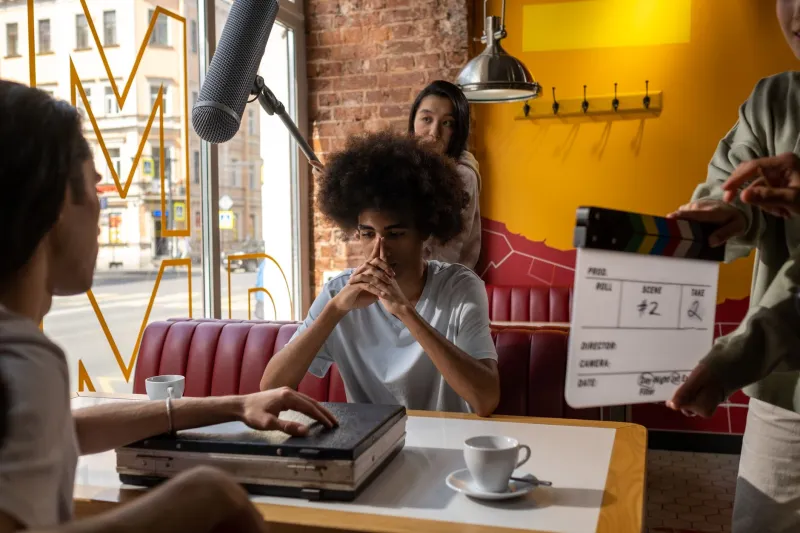
Ten years ago, getting seen for a network pilot meant a plane ticket or a very expensive bus ride. Today it means a ring light, a blank wall, and a friend holding a phone. The self-tape didn't just change how actors audition — it quietly redrew the map of who gets to be in the room at all.
I think, on balance, that's been good. But I also think we've been too polite about what it cost.
What the Tape Actually Broke Open
Let's give the shift its flowers first, because the wins are genuine and they've been disproportionately good for people the old system filtered out.
The old casting model was geography. If you lived outside LA, New York, and maybe Chicago or Atlanta, you were essentially invisible unless you were willing to uproot your life on speculation. That filtered out parents who couldn't move, people without savings, and — because of how wealth and opportunity distribute in this country — a whole lot of actors from underrepresented backgrounds. The waiting room was a gatekeeper whether anyone admitted it or not.
Self-tapes blew that wall down. A talented actor in Ohio can now tape for a streaming series on a Tuesday and get a callback by Friday. Regional theater actors, working parents, folks in markets like New Mexico and Georgia — all of a sudden they're in the mix. Any honest accounting of how American casting has broadened in the last decade has to include the humble phone camera. The tape didn't fix representation in this industry, but it removed one of the dumbest barriers, and that mattered.
The New Gate Is Made of Money and Wi-Fi
Now the uncomfortable part.
The tape replaced one gate with another. The blank wall and ring light aren't free — or rather, the equipment is cheap, but the quality bar isn't. Producers now expect self-tapes that look half-produced: clean audio, decent lighting, a reader who isn't mumbling off-camera. That costs money or it costs connections, and the actors with the least of both are back where they started.
And the volume problem is worse. When taping is free for the production, casting requests become costless. Actors routinely tape multiple projects a week on spec — unpaid labor, every single time, with no feedback, no thank-you, and increasingly no human being watching the first thirty seconds. The waiting room was expensive but at least someone looked you in the eye. The inbox is free and infinitely dismissive.
There's a third cost nobody wants to name: the tape is a performance without an audience. Chemistry, presence, the ability to win over a room — none of it translates through a phone lens the same way. We've selected, over a decade, for a slightly different kind of actor. Maybe a better one on camera. Maybe just a better one at taping.
So Was It Worth It?
Yes — and the people saying otherwise are mostly people who never had to choose between a callback and a car payment.
The access gains are real, permanent, and impossible to un-ring. The answer to the new problems isn't nostalgia for the waiting room; it's regulation and norms. States and unions pushing back on unlimited unpaid taping demands, productions covering reader costs for callbacks, casting directors actually watching full tapes — these are achievable fixes, and the industry is slowly, grudgingly moving that way.
The waiting room is gone. Good. What comes next is making sure the bedroom doesn't become just another room some people can't afford to be in.