The Characters Your Grandparents Carried: How Family History Becomes Your Greatest Acting Resource
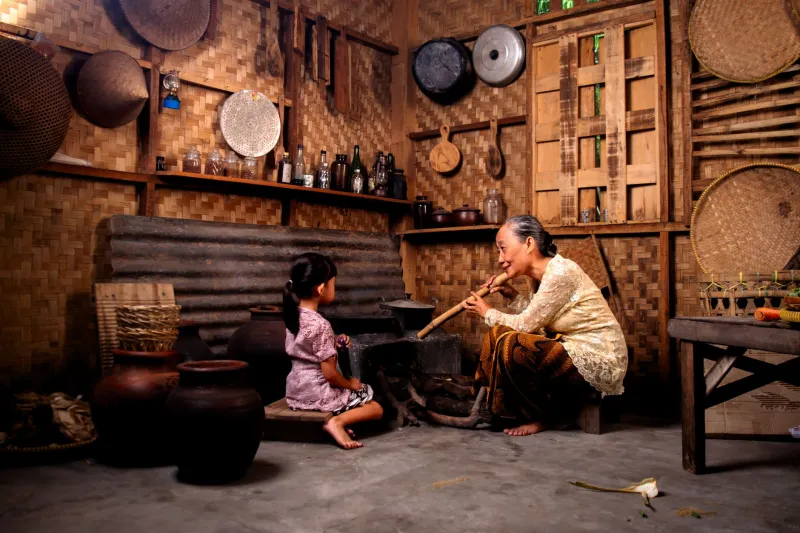
There's a particular kind of story that gets told in South Asian households — or more accurately, that doesn't get told. The story that lives in what your grandfather changes the subject to avoid. In the way your mother's face shifts when certain cities get mentioned. In the recipe your grandmother makes from memory because the written version was lost somewhere between one country and another.
Those silences and that muscle memory and those deflections — that's character. That's the richest, most specific, most un-fakeable raw material an actor can have access to.
And most of us walk past it every single day without recognizing what it is.
What "Research" Actually Means
Acting training tends to point you toward external research when you're building a character. Study the period. Find the cultural context. Watch documentaries. Read firsthand accounts. All of that has real value.
But there's a category of research that sits closer to home — literally — and it goes deeper than anything you can find in an archive. It's the living, breathing, sometimes contradictory mythology of your own family.
Every family is a collection of characters. Some of them are still alive. Some of them exist only in the way other family members talk about them — or refuse to. The grandmother who came over with nothing and built something. The uncle who made a choice that nobody discusses at the dinner table. The parent who carried an entire country's worth of grief across an ocean and learned to smile anyway.
These are not supporting players in your personal story. They are complete human beings with interior lives, contradictions, desires, and damage. And because you share blood and history and kitchen tables with them, you have access to a quality of understanding that no amount of external research can fully replicate.
The Texture of Generational Trauma
Here's something that acting teachers talk about abstractly but rarely get specific about: the body holds history. Trauma — particularly the kind that spans generations, that gets passed down through behavior and silence and the particular way a parent flinches at certain sounds — has a physical texture.
For actors from South Asian families, that texture might include the specific hypervigilance of a family that navigated Partition. The particular brand of perfectionism that immigrant parents develop when they understand, at a cellular level, that there is no safety net. The way certain emotions get expressed sideways — through food, through work, through a kind of fierce practicality — rather than directly.
When you understand those patterns in your own family, you understand them in your characters. Not as a general concept, but as a felt, embodied reality. That's the difference between performing grief and actually accessing it.
Practical Ways to Mine the Archive
So how do you actually do this work? It's less structured than a script analysis session and more intimate than most actors are comfortable with. But here are some entry points.
Have the conversations you've been postponing. Ask your parents about their parents. Ask about the places they came from, the choices they made, the things they left behind. Ask about the versions of themselves that existed before you knew them. People are often more willing to talk about their history than we assume — we just never ask.
Pay attention to the stories that get told on repeat. Every family has them — the anecdotes that get pulled out at gatherings, the defining moments that have been polished through retelling into something almost mythological. Those stories are being told over and over for a reason. The emotional need they're serving is character information.
Notice what doesn't get said. The gaps are as informative as the stories. What topics shift the energy in the room? What questions get deflected or redirected? What events exist in the family timeline only as vague references? Absence is data. What a person won't say tells you as much about who they are as what they will.
Look at photographs with a character's eye. Old family photos are remarkable research tools. Look at posture, at the relationship between people in the frame, at what's in the background. Who's touching whom? Who's looking away from the camera? What does the setting tell you about the circumstances? These images hold entire worlds.
Making It Specific Without Making It Personal
There's a necessary step between using your family history as research and actually putting it into a performance: the process of transformation. You're not playing your grandfather. You're not playing your mother. You're using what you understand about them — their rhythms, their silences, their particular way of carrying the weight they carry — as building blocks for a character who has their own distinct life.
This distinction matters both artistically and emotionally. If you're just replaying family dynamics on stage, you're not acting — you're processing. The craft involves taking the raw material of what you know and reshaping it into something that serves the story you're telling.
But the emotional specificity, the cultural particularity, the physical reality of how these patterns live in a body — that's yours to keep and use. Nobody else in that audition room has it. That's the whole point.
Why This Matters Especially Now
American entertainment is in a genuine moment of transition. Stories that center South Asian characters, immigrant experiences, and the particular complexity of living between cultures are being greenlit in ways they weren't a decade ago. That's meaningful.
But the risk that comes with that opportunity is the temptation to play the idea of a South Asian character rather than an actual human being. To perform the cultural signifiers — the accent, the family pressure, the arranged marriage subplot — without the interior life that makes those elements feel true rather than decorative.
The interior life comes from the real stuff. From the grandmother's recipe and the grandfather's silence and the family story that's been told so many times it's become mythology. From the specific texture of a particular immigrant experience, not the generic version.
Your family history is not a limitation on the kinds of characters you can play. It's a depth charge. Drop it into your preparation and let it change the pressure of everything that follows.
The Legend Lives in the Particulars
The art, the story, the legend — none of it lives in the general. It lives in the detail that makes someone feel recognized. The specific gesture. The particular silence. The way a character holds their grief in their shoulders instead of their face.
Your family gave you a library of those details. They've been accumulating your whole life, sitting quietly in the background of holidays and arguments and long car rides and kitchen conversations you half-listened to as a kid.
Go back. Listen differently. The characters you've been searching for have been waiting at the kitchen table all along.