The Price of Arrival: Why Getting Everything You Wanted Can Leave You Feeling Empty
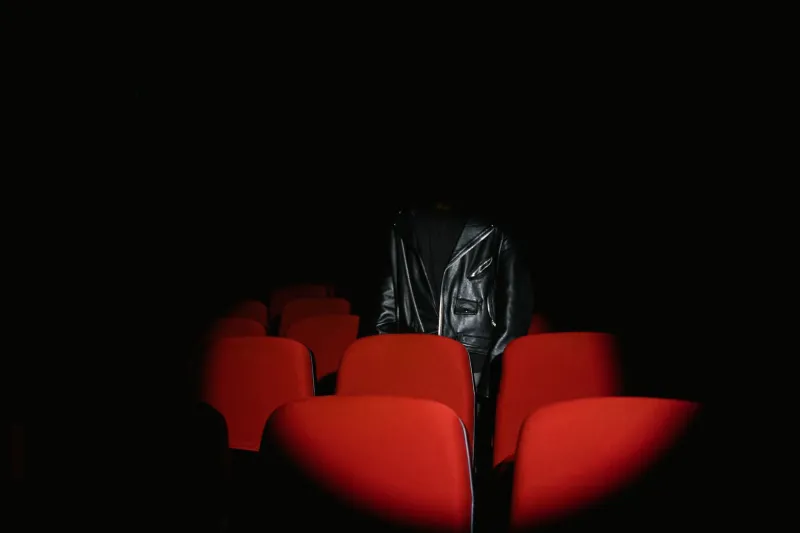
Somewhere between the congratulations texts and the first time someone recognizes you at a coffee shop, something shifts. It's subtle at first — a slight change in how people look at you, a pause before someone speaks, a feeling that the room has rearranged itself around your presence. You worked for this. You wanted this. And yet.
Nobody warns you about the quiet that follows a breakthrough.
The Fantasy vs. The Feeling
For most artists, the dream of "making it" is wrapped up in community. You imagine yourself at the top with all the people who were in the trenches beside you — the late-night rehearsals, the shared apartments, the mutual pep talks before auditions that didn't pan out. The dream is collective, even when the work is deeply personal.
But success, when it actually arrives, doesn't work that way. It tends to arrive alone.
The relationships that sustained you during the hungry years are built on a kind of beautiful equality — everyone is struggling, everyone is hoping, and that shared uncertainty creates genuine intimacy. The moment that balance tips, even slightly, something in the dynamic changes. Friends who used to call just to talk now call with favors in mind. Mentors who once felt like collaborators start feeling like they're watching from a distance. And peers — the people who knew you before — sometimes disappear entirely, not out of malice but out of something harder to name.
It's not jealousy, exactly. It's more like grief.
Visibility Has a Cost Nobody Quotes You
There's a particular kind of exhaustion that comes with being seen. When you're building toward something, your failures are mostly private. You can stumble in an audition room and walk back out into a world that doesn't know or care. But once your name is out there — once your face is attached to something that people recognize — every move becomes legible to strangers.
That visibility changes how you move through the world. You start editing yourself in real time. You become aware of how a casual opinion, shared in the wrong room, can become a headline. You stop saying the half-formed things out loud, because half-formed things used to be safe to share with your people, and now "your people" is a more complicated category.
What gets lost in that editing process is spontaneity. And spontaneity — the freedom to be uncertain, to be wrong, to be mid-thought — is basically the lifeblood of creative work.
The Former Self Problem
Here's the part that doesn't get talked about enough: success can estrange you from who you used to be, and that loss hits different than losing a relationship with another person.
The version of yourself that was hungry, scrappy, and perpetually underestimated had a certain clarity to them. They knew exactly what they wanted and why. They had something to prove. That edge — that specific kind of motivation — doesn't survive the breakthrough intact. And grieving the loss of your hungrier self while simultaneously celebrating your success is a genuinely disorienting emotional experience.
A lot of artists in this position describe feeling like an imposter — not because they don't deserve what they've earned, but because the person who earned it feels like someone they used to know.
What the Industry Doesn't Offer You
The entertainment industry, particularly in the US, is extraordinarily good at celebrating arrival and completely unprepared to support what comes after. There are parties for the premiere and profiles in the trades and congratulatory DMs from people you've never actually met. What there isn't? A real infrastructure for the psychological complexity of sustained visibility.
Therapy helps. A lot of artists will tell you that quietly. Not the performative kind that gets mentioned in interviews as a brand-building move, but the actual, unglamorous work of figuring out who you are when the external validation is finally present but the internal compass feels scrambled.
Mentors who've been through it help too — but finding them requires admitting vulnerability in an industry that often reads vulnerability as weakness. That's a hard needle to thread when you're also trying to project the kind of confidence that keeps the momentum going.
Building Something Real Inside the Machine
So what do you actually do with this? A few things seem to genuinely work, based on watching artists navigate this terrain over time.
Stay connected to the work itself, not the reception of the work. The craft — the actual technical and emotional labor of creating something — doesn't care about your credits. Getting back into a room where you're learning, where you're a beginner again, has a grounding effect that's hard to replicate any other way.
Invest in relationships that predate the success. Not because those people are more "real" in some abstract sense, but because they have context for who you are that newer connections simply can't have yet. Those relationships require maintenance, and they require you to show up as yourself, not as your professional persona.
Find community outside the industry. This sounds obvious and is surprisingly hard to actually do. But having friendships built around something other than shared professional ambition — a neighborhood, a hobby, a cause, a faith community — creates a kind of ballast that industry relationships rarely provide.
Resist the urge to perform okayness. The pressure to seem like you're thriving, especially once you've crossed a certain visibility threshold, is enormous. But the cost of that performance is authenticity, and authenticity is what makes the work worth doing in the first place.
The Longer View
Success in any creative field is rarely a single moment of arrival — it's more like a series of thresholds, each one carrying its own psychological weight. The artists who seem to navigate it with the most grace aren't the ones who pretended the loneliness wasn't there. They're the ones who acknowledged it, sat with it, and found ways to stay connected to themselves and to genuine human community even as the professional landscape shifted around them.
The breakthrough is real. The work that earned it is real. And the disorientation that follows? That's real too. Naming it honestly is probably the first step toward moving through it without losing the parts of yourself that made the work worth watching in the first place.