Why Some Performances Stay With You Forever (And Most Don't)
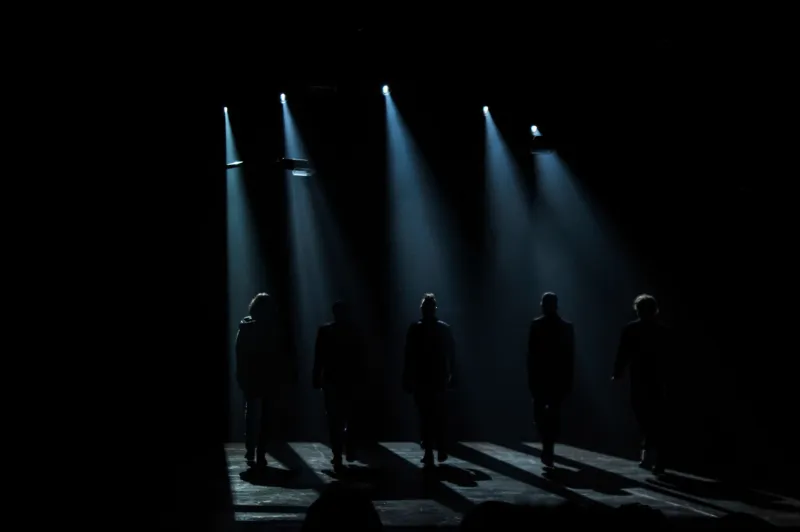
You know the feeling. You're sitting in a darkened theater, or curled up on your couch watching something on your laptop at midnight, or standing in a crowd at a concert — and then it happens. A performer does something, says something, becomes something, and the air in the room changes. You feel it before you understand it. And weeks later, maybe years later, you're still thinking about it.
Most entertainment doesn't do that. Most of it is fine, even good, and then it's gone. You forget it the way you forget what you had for lunch on a Tuesday three weeks ago. But occasionally — rarely — something transcends the category of "entertainment" and becomes something closer to art. Something that lives in you.
The question worth asking, and the one I keep coming back to, is: why? What actually separates the performances we forget from the ones we carry with us?
Technique Is the Floor, Not the Ceiling
Let's start with what everyone agrees on: technical skill matters. An actor who can't control their instrument, a musician who hasn't put in the hours, a dancer whose body hasn't been trained to execute what their imagination conceives — these are people working with tools that aren't sharp enough. The craft is real, and it's non-negotiable.
But here's the thing. Technical mastery is everywhere. There are thousands of technically proficient performers in every discipline. Conservatories produce them by the graduating class. And most of them, despite their considerable skill, never deliver a performance that changes someone's life.
Technique is the floor. You need it to be in the room at all. But the ceiling — the place where the truly legendary performances live — is determined by something else entirely.
Emotional Honesty Is Rarer Than Talent
Watch Meryl Streep in almost anything, and you'll notice something that's easy to take for granted because she makes it look effortless: she never seems to be performing. She seems to be living. There's a distinction there that matters enormously.
Performing is about executing. Living is about feeling. The best entertainers — the ones whose work endures — have figured out how to collapse the distance between those two things. They're not simulating an emotion and hoping the audience buys it. They're accessing something genuine, channeling it through their craft, and allowing the audience to witness it.
This is harder than it sounds. It requires a kind of vulnerability that most people, understandably, spend their lives trying to avoid. To stand on a stage or in front of a camera and let something real show through — to not hide behind technique or persona or habit — is genuinely frightening. And that's exactly why it's rare.
Think about Marlon Brando in The Godfather. Or Joaquin Phoenix in Walk the Line. Or, in a completely different register, Kendrick Lamar performing "Alright" at an outdoor concert, turning a recorded track into something that felt like a communal act of resistance. In each case, the performer wasn't just executing a role or a song. They were telling the truth. And audiences can feel the difference.
The Audience Completes the Circuit
Here's something that doesn't get talked about enough: a legendary performance is never a solo act. The audience is always part of it.
This is most obvious in live performance. A comedian who kills on a Tuesday night in a packed room might fall flat on a Wednesday to a half-empty house — not because the material changed, but because the energy in the room shifted. Live performance is a conversation. The audience responds, the performer adjusts, and something emerges from that exchange that neither party could have created alone.
But even in recorded media, the audience completes the circuit. A film performance that resonates deeply does so because something in the viewer meets something in the performer. The viewer brings their own grief, their own longing, their own memory — and the performance becomes a mirror. Heath Ledger's Joker hit so differently for different people precisely because the character was open enough to reflect back whatever darkness the viewer brought to it.
This is why great performances are often described as "universal" even when they're rooted in highly specific circumstances. Specificity, paradoxically, is what creates universality. The more precisely a performer captures a particular human truth, the more people recognize it as their own.
Cultural Resonance and the Weight of a Moment
Some performances become legendary not just because of what happens within them, but because of when they happen. They arrive at a moment when a culture is ready to receive them, and they crystallize something that was already in the air.
Beyoncé's Lemonade visual album is a useful example. Technically, it was an extraordinary achievement — stunning cinematography, sharp writing, deeply personal and political content. But it also landed at a specific cultural moment, when conversations about race, gender, infidelity, and Black womanhood were already at the surface of American life. The album didn't just comment on those conversations — it became central to them. It gave millions of people a language for things they'd been feeling but hadn't been able to say.
That kind of cultural resonance can't be engineered. You can't manufacture the right moment. But artists who are paying attention, who are genuinely engaged with the world around them rather than insulated from it, are more likely to create work that catches the current.
The Intangible Thing
After all of this — the technique, the emotional honesty, the audience connection, the cultural context — there's still something left over that resists explanation. Call it presence. Call it electricity. Call it whatever you want; the point is that some performers have it and most don't, and it's not clear that it can be taught.
You feel it when Cate Blanchett enters a scene. You feel it when Prince picks up a guitar. You feel it when a great stand-up comic takes the mic and the room goes quiet before they've said a word. Something in the air changes. The performer is simply, undeniably, there — more there than most people ever manage to be.
Maybe that's the real answer. The performances that stay with us are the ones where a human being showed up so completely, so without reservation, that we couldn't look away. In a world full of distraction and half-presence, that kind of totality is the rarest thing of all.
And when you witness it — whether it's on a Broadway stage, a cinema screen, or a dusty concert venue on a Tuesday night — you don't forget it. That's the whole point. That's what art does.
At Pramod Singh Tomar, we believe the story of entertainment is ultimately the story of that connection — between an artist and an audience, between a moment and its meaning. The legend isn't built in a day. But when it arrives, you know it.