Write Your Own Myth: The Case for Keeping a Record of Your Career Before Anyone Else Does
Here's a thing that happens to almost every actor who works long enough: one day, someone asks them to tell their story, and they realize they can't remember the details.
A journalist wants a bio. A producer asks for a look back at their early roles. A podcast host says 'so walk me through how it all started' — and the actor blanks, because the truth is that the breakout everyone knows about was preceded by seven years of nothing, and 'nothing' is exactly what they remember.
The industry is a storytelling machine, and it will tell your story with or without you. The only variable is whether you contributed.
The Archive Nobody Thinks to Build
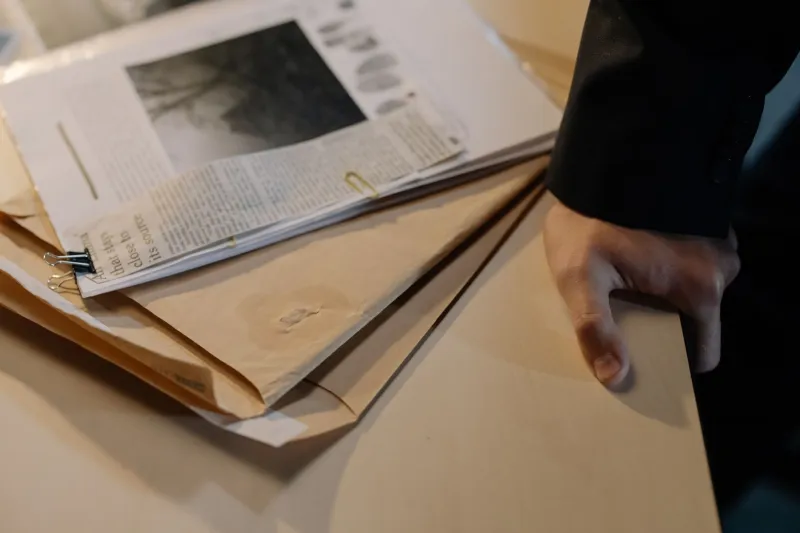
Ask veteran performers what they wish they'd saved and the answers are almost embarrassingly simple. Programs from off-off-Broadway shows that closed in three weeks. The rejection email that later became a great anecdote. A VHS — now a corrupted file — of their first on-camera work. The journal from the year they almost quit.
None of this feels important while it's happening. It's all important later, because a career in this business is fundamentally a narrative asset, and narratives need source material.
Think about how the actors with real staying power are discussed. There's always a story arc: the early obscurity, the turning point, the reinvention. Some of that arc gets written by the press, sure. But the performers who seem to control their own narrative — the ones whose interviews feel sharp instead of rambling, whose careers seem to make sense — almost always have an archive behind them. Clippings, personal journals, a well-organized reel, notes on every role. They're not more interesting than their peers. They just kept the receipts.
What the Record Is Actually For
This isn't sentimentality, or at least not only. A personal archive is a working tool with three very practical uses.
Leverage. When you walk into a negotiation with a documented record of what you've drawn, what you've carried, what you've grown — you're negotiating from evidence instead of memory. Memory undervalues; documents don't.
Material. Press interviews, bios, keynote invites, that eventual memoir — all of it draws from the same well. An actor with a decade of journals can speak in specifics. Specifics are what make interviews memorable and bios quotable. 'I struggled for years' is nothing. The story about the summer you did children's theater in Sacramento while auditioning on your lunch breaks is everything.
Legacy. This is the one people dodge, so let's say it plainly: the work outlives the worker, but only if someone can find it and understand it. Performers who documented their process — the notebooks, the rehearsal footage, the letters — become teachers after they're gone. Their archives get studied. The rest become trivia answers.
Start Embarrassingly Small
The good news is that this takes about twenty minutes a month, and you can start today with what you already have.
Create one folder — digital, backed up in two places — and put in it: every role you've done with dates, every clipping or review, every tape you're proud of, and a running journal where you write a few sentences after each job about what you learned and what it cost you. That last part matters most. The jobs are public record. The inner story is yours alone, and it's the part nobody else can write.
The industry will write your legend eventually. It will get details wrong, flatten your turning points, and center whatever was easiest to report. That's not malice; it's just how the machine works.
The performers who own their story are the ones who kept the notebook while everyone else assumed someone else was keeping it. Start yours now — future you, sitting in some interview years from now, is already grateful.