Inside the Character: The Rituals and Raw Work That Shape Every Role

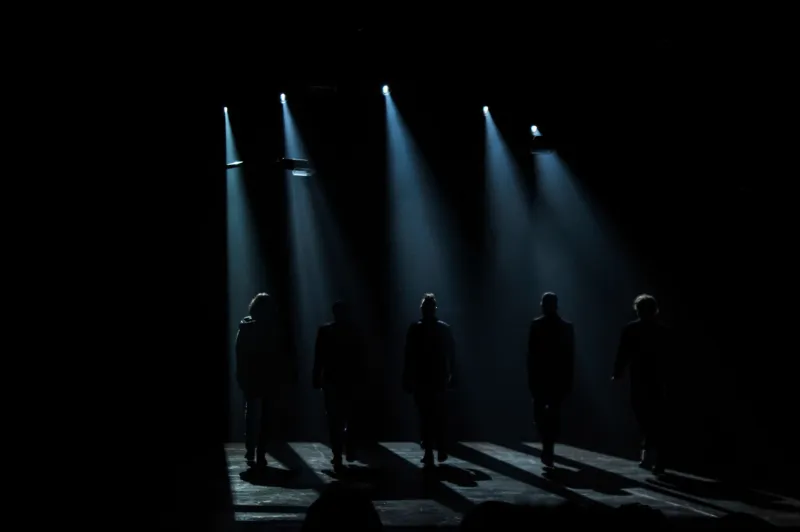
Photo by Photo by Emmanuel Ikwuegbu on Unsplash on Unsplash
There's a moment — somewhere between reading a script for the first time and stepping in front of a camera or audience — where something shifts. The character stops being words on a page and starts feeling like a person with a pulse. For Pramod Singh Tomar, that moment isn't left to chance. It's engineered, slowly and deliberately, through a preparation process that blends intellectual rigor with deeply personal excavation.
This isn't about tricks or shortcuts. It's about doing the work.
Starting With the Story, Not the Character
One of the more counterintuitive parts of Pramod's approach is that he doesn't begin by studying the character he's playing. He starts with the world the character lives in.
That means digging into context — historical, cultural, social. If a role is set in a specific time period or community, that world needs to feel lived-in before a single line of dialogue is memorized. Think of it like renovating a house: you need to understand the foundation before you start picking out paint colors.
For roles rooted in South Asian experience — which carry their own layered histories, family dynamics, and cultural codes — this research phase is especially important. American audiences often encounter these stories without the full context. Part of the performer's job is to carry that context in their body, even when it never gets spoken out loud.
The Notebook Habit
Pramod keeps a character journal for every significant role. Not a polished document — more like a messy, evolving conversation with the character on paper.
These notebooks include everything from backstory details that never appear in the script, to questions the character might ask themselves at 2 a.m., to physical observations — how does this person hold their coffee cup? Do they make eye contact easily, or do they tend to look slightly to the left?
This level of specificity might sound excessive, but it's exactly what separates a performance that feels real from one that feels performed. Audiences are remarkably good at detecting inauthenticity, even if they can't name what's off. The details are the difference.
Physicality as a Gateway
A lot of actors start from the inside out — emotion first, body second. Pramod often works the other way around, especially for roles that require a significant departure from his own personality or background.
Figuring out how a character walks, sits, breathes, and occupies space can unlock emotional truth faster than any amount of internal reflection. There's a reason physical warm-ups are a staple of serious theater training. The body holds things the mind hasn't consciously processed yet.
For more intense or psychologically complex roles, this physical work becomes almost meditative. It's a way of quieting the analytical brain and letting something more instinctive take over. That's where the genuinely surprising choices come from — the ones that make an audience lean forward without knowing why.
Research That Goes Beyond Google
For roles involving specific professions, mental health experiences, or subcultures, surface-level research isn't enough. Pramod has been known to seek out real conversations — with doctors, community members, people who've lived through experiences similar to the character's.
This isn't about mimicry. It's about empathy as a research tool. When you sit across from someone and really listen to how they describe their life, you absorb something that no documentary or Wikipedia article can give you. You start to understand the why behind behavior, not just the what.
For American audiences watching South Asian stories on screen, this kind of grounded research is what makes a character feel universal rather than ethnographic. The specific becomes relatable. The particular becomes human.
The Psychological Tools
Some roles require going to uncomfortable places emotionally. That's just the reality of serious dramatic work. Pramod has talked openly about using a combination of sense memory techniques and what he calls "emotional archaeology" — digging back through personal experience to find feelings that can be redirected into a character's circumstances.
The key is control. Using personal emotion in performance is a skill, not a liability — but it requires a clear on/off switch. The work happens in the room; it doesn't follow you home. Developing that boundary is something that takes years of practice and, frankly, a lot of self-awareness.
Mindfulness practices play a supporting role here too. Being able to get quiet, to be present in the moment without the noise of overthinking, is essential when the camera is rolling or the curtain goes up.
What Fans Don't See
Here's the thing about transformative performances: the preparation is almost entirely invisible by design. If the homework shows, the performance fails. The goal is to make it look effortless — which is, of course, the most effortful thing of all.
For anyone watching Pramod's work and wondering how a character can feel so fully realized, so specific and alive, this is the answer: it was built that way, piece by piece, long before the lights came on.
The magic is real. It just looks different up close.