What Your Scene Partner Is Telling You That Your Coach Never Could
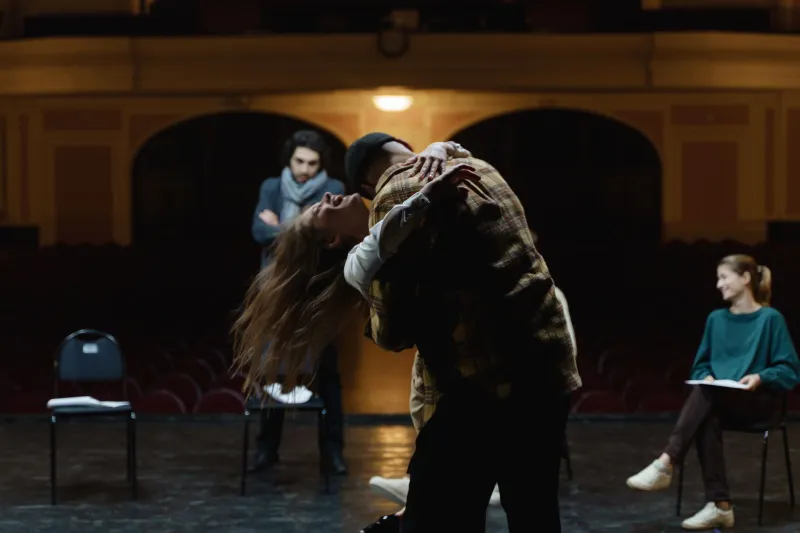
There's a moment in almost every great performance where you can feel it shift. Something loosens. The actor stops performing and starts responding. The scene breathes differently. The audience leans in without knowing why. That moment — that invisible pivot — almost always comes down to the same thing: one person in the scene actually listening to the other.
It sounds almost embarrassingly simple. And yet it's the thing that separates technically competent actors from genuinely unforgettable ones.
The Illusion of Preparation
Acting schools, workshops, and coaches spend enormous amounts of time teaching people how to prepare. How to break down a script, build a character's backstory, find the emotional truth in a given moment. That work matters. Nobody's saying it doesn't. But here's what rarely gets said out loud: all that preparation can become a trap.
When you walk into a scene with a completely locked-in idea of how every beat should feel, how your character moves through each emotional turn, what your line readings are going to sound like — you're not really acting anymore. You're executing a blueprint. And blueprints, no matter how detailed, don't account for the living, breathing human being standing across from you.
The best actors in the room aren't the ones who prepared the hardest. They're the ones who prepared thoroughly enough to feel safe letting go of the preparation entirely.
Silence as Information
Watch how the truly great ones handle silence. Not the performed kind — the pause that's been rehearsed and placed with surgical precision — but the real kind. The silence that happens because someone actually took in what was just said and needed a moment to figure out what that meant for them.
That kind of silence is terrifying for a lot of actors because it feels like nothing is happening. In reality, it's where everything is happening. The audience isn't watching empty space; they're watching a person think, feel, recalibrate. That's riveting. That's human.
Actors who've mastered listening understand that what their scene partner does between the lines — the micro-expressions, the tiny physical adjustments, the quality of breath — is as much a part of the scene as the dialogue itself. They're not waiting for their cue. They're reading a person.
The Generous Actor
There's a phrase that floats around sets and rehearsal rooms: generous actor. It gets used a lot, but it's worth unpacking what it actually means in practice.
A generous actor doesn't just give a strong performance — they create the conditions for their scene partner to give one too. They stay present. They don't go internal at the exact moment the other person needs them to be externally available. They respond to what's actually being offered rather than what they expected to be offered.
This generosity isn't selfless in some saintly way. It's deeply practical. When you give your scene partner something real to react to, they give you something real back. The whole scene elevates. What you get on camera or on stage in that moment is two people genuinely affecting each other — and that's the exact texture audiences recognize as truth, even if they can't name why.
When the Plan Falls Apart and That's the Point
Some of the most celebrated performances in film and television history came from moments where something unexpected happened and the actor didn't try to correct back to the plan. They let the unexpected thing be the scene.
That only works if you're listening. If you're locked inside your own head, running your internal script, an unexpected moment from your partner is just a disruption. But if you're genuinely present and paying attention, that same moment is a gift — a chance to respond with something that couldn't have been rehearsed because it didn't exist until right now.
The actors who talk about this most honestly will tell you that their favorite performances are often the ones where things went sideways. Where their partner did something they didn't anticipate, and instead of panicking, they got curious. Why did they do that? What does that mean for my character? What does this person in front of me actually need right now?
That curiosity — genuine, in-the-moment curiosity about another human being — is the engine of real listening.
What Watching Teaches You
Here's something interesting: you can learn more about listening by watching great actors work than you can from most formal instruction. Pay attention to where their eyes go. Notice how long they hold their gaze on their partner after a big line lands. Watch what happens in their body when they receive difficult news in a scene.
The actors worth studying aren't performing their reactions — they're having them. There's a difference that's subtle in description and enormous in effect. Performed reactions are calibrated, shaped, delivered at the right moment. Real reactions are slightly messy, sometimes delayed, occasionally surprising even to the actor themselves.
That messiness is the truth. And it comes directly from listening.
The Collaborative Architecture of a Great Scene
Storytelling at its best is never a solo act, even when it looks like one. The most powerful scenes in any medium are built collaboratively in real time, with both performers contributing to an architecture that neither one could have constructed alone.
This is why the actors who are known as great scene partners — the ones everyone wants to work with — tend to have careers that compound over time. They make the people around them better. Directors notice. Writers notice. Other actors notice. There's a reputation that builds not around individual brilliance but around what happens when they're in a room with someone else.
That reputation starts with one simple, radical commitment: actually paying attention to the person in front of you.
The Hardest Skill Nobody Teaches
Audition classes teach you to be compelling. Technique classes teach you to be believable. Scene study teaches you to understand text. But almost nobody sits you down and teaches you the discipline of shutting off the internal monologue long enough to truly receive what another person is sending you.
Maybe that's because it's harder to teach than a method or a technique. It requires a kind of ego surrender that doesn't come naturally in a profession built around being seen. To really listen, you have to stop managing your own performance for a moment and care more about the scene than about yourself in the scene.
That's the work. Not the preparation, not the technique — the willingness to show up, pay attention, and let what's actually happening in the room be more important than what you planned for.
The actors who figure that out? They're the ones you remember.