From Trying to Being: The Invisible Line Between Performing and Presence
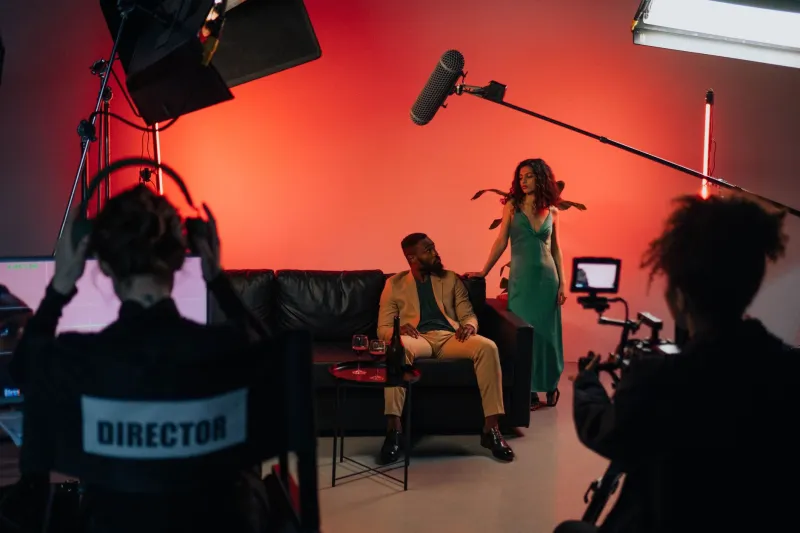
Watch any great performance twice. The first time, you're caught up in the story. The second time, you start noticing something stranger — you can't actually catch the actor acting. There's no seam. No moment where you sense the effort underneath. It just feels like a person living inside a situation, and you can't look away.
That quality has a name, even if it's hard to pin down. People call it presence. Magnetism. Star power. But those words are almost too convenient — they make it sound like something you're either born with or you're not. The truth is more interesting, and honestly more useful, than that.
The Audition Mindset Never Really Leaves the Room
Here's something most actors don't want to admit: the psychological posture of an audition — please choose me, please see me, please decide I'm enough — doesn't automatically disappear when you book the job. It travels with you onto set. It sits behind your eyes during takes. And audiences, even when they can't articulate it, feel it.
There's a kind of performing that's fundamentally transactional. The actor is making an offer. Look what I can do. Look how committed I am. Look how much I understand this character. The performance is pointed outward, aimed at someone's approval. And technically, it might be flawless. The beats are hit. The emotion is real. The craft is evident.
But something is missing. And that something is presence.
Presence, in the way we're talking about it, isn't volume or charisma or even confidence in the conventional sense. It's the quality of an artist who has stopped negotiating with the audience and started simply occupying the space. The camera — and people watching — respond to that distinction in ways that are almost physiological.
What the Shift Actually Looks Like
There are specific markers when a performer crosses this line, and once you know what to look for, you'll see them everywhere.
The first is stillness. Not passivity — there's a difference. Performers who are auditioning tend to fill silence with micro-adjustments. A tilt of the head. A blink held a half-second too long. A breath that signals I'm about to say something meaningful. Performers who have arrived at presence can simply exist in a moment without decorating it. They trust the silence to hold weight, because they've stopped being afraid of what it might reveal.
The second marker is listening. Real listening, not the performed kind. When an actor is in audition mode, they're often waiting to speak — mentally rehearsing their next line while their scene partner is mid-sentence. But presence lives in genuine reception. You see it in the eyes. Something is actually landing, actually being processed. The scene becomes a real exchange rather than two people trading prepared moments.
The third is harder to name but unmistakable: specificity without announcement. Actors who are still seeking approval tend to underline their choices. They want you to notice the detail, the nuance, the emotional intelligence. Performers with presence make equally specific choices — maybe more specific — but they don't flag them. The detail exists for the character, not for the audience's appreciation of the actor.
The Self-Acceptance Problem Nobody Talks About
Here's where it gets uncomfortable. A lot of technically brilliant performers never make this leap, and the reason usually isn't about craft at all. It's about self-acceptance — specifically, the inability to believe that who they are, without performance, is enough to fill a frame.
Auditioning, even on a subconscious level, is an act of self-defense. If I show you everything I can do, maybe you won't notice what I'm not. If I hit every mark perfectly, maybe the camera won't find the parts of me I haven't resolved yet. But presence requires the opposite move. It requires a kind of radical exposure — showing up without the armor of technique and trusting that the camera will find something worth watching anyway.
This is why some of the most technically trained performers in the world can feel curiously hollow on screen, while someone with a fraction of their formal background can stop you cold with a single look. The latter has made peace with something the former is still fighting.
It's not about being comfortable or confident in a surface sense. Plenty of magnetic performers are deeply anxious people. It's more about acceptance of the self as a complete instrument — flaws included — rather than a project to be optimized before it's ready for display.
The Paradox of Stopping the Effort
What makes this shift so difficult to engineer is that you can't force it by trying harder. The entire point is the cessation of a certain kind of effort. You can't work your way into not working.
What you can do is create conditions where the shift becomes possible. Some performers get there through sheer accumulation of experience — enough reps that the fear of the camera loses its grip. Some get there through therapy or meditation or life circumstances that fundamentally change their relationship with being seen. Some find it through a director who creates enough safety that they stop performing for approval and start performing for truth.
And some find it through a single moment — a take where something unexpected happened, where they stopped managing the scene and started living it, and they felt the difference in their chest. Once you feel it, you spend the rest of your career trying to get back there.
Why This Matters Beyond the Screen
The reason this conversation feels relevant beyond just craft analysis is that it touches something universal. The gap between performing a version of yourself for external validation and simply existing as yourself — that's not just an actor's problem. It's a human one.
What makes the best performers worth studying isn't just that they're good at their jobs. It's that they've figured out something about being a person that most of us are still working on. They've learned, or been forced to learn, that the most compelling thing they can offer isn't a demonstration of capability. It's genuine presence.
That's the art. That's also the legend. Not the highlight reel of perfect moments, but the willingness to exist fully in the imperfect ones.
And when a performer finally gets there — when they stop auditioning for your love and start simply being in front of you — you feel it immediately. You lean in. You don't know why. But something in you recognizes it as real.