Shape-Shifting Without Selling Out: The Real Art of Reinventing Yourself

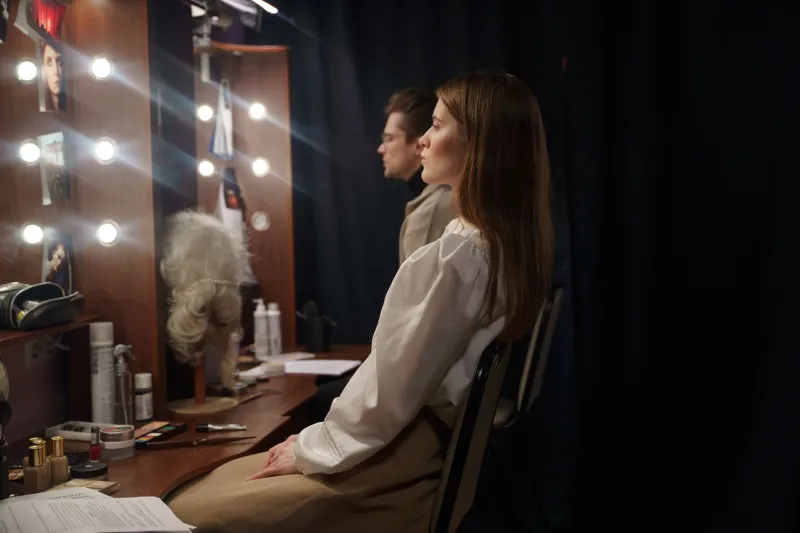
Photo by Photo by Valery Sysoev on Unsplash on Unsplash
There's a moment every artist knows. It's not dramatic — no spotlight, no announcement. It's quieter than that. It's the moment you finish something you've done a hundred times before and feel absolutely nothing. No spark, no pride, just the hollow echo of competence. That moment is terrifying. It's also, if you're paying attention, an invitation.
Reinvention gets talked about like it's a marketing move — a rebrand, a new publicist, a bold haircut. But the artists who actually pull it off, the ones who come out the other side with their credibility intact and their audience still leaning in, will tell you something different. They'll tell you reinvention isn't about erasing who you were. It's about figuring out who you've always been trying to become.
The Myth of the Clean Break
Pop culture loves a dramatic pivot. The actor who goes from blockbuster action films to quiet indie dramas. The musician who ditches their genre entirely. The comedian who suddenly wants to be taken seriously. We frame these moments as ruptures — before and after, old self and new self.
But that framing is almost always wrong.
Look closer at almost any successful creative evolution and you'll find threads. Cormac McCarthy wrote violent, morally complex fiction for decades before No Country for Old Men made him a household name — he didn't change, the audience caught up. Viola Davis spent years in supporting roles where she quietly, methodically demonstrated a range that Hollywood kept underutilizing. When How to Get Away with Murder arrived, it didn't feel like a reinvention. It felt like a revelation of something that had always been there.
The most strategic artists understand this distinction deeply. They're not abandoning their core — they're excavating it.
Calculated Risk vs. Random Chaos
Here's where craft comes in, because there's a real difference between a calculated creative risk and just throwing things at the wall.
Calculated risks are informed by self-knowledge. An artist who genuinely understands their own strengths — what draws people to them emotionally, what quality in their work makes audiences feel something specific — can identify adjacent territories worth exploring. They ask: What am I capable of that I haven't shown yet? What would stretch me without snapping me?
Random chaos looks like reinvention but it's actually just panic. It's the performer who chases trends, who reads a bad review and immediately tries to become whatever that critic praised instead. That kind of reactive shifting doesn't build a career — it erodes one, because audiences can smell inauthenticity the way dogs smell fear.
The psychological discipline required here is significant. You have to hold two things at once: genuine openness to growth and a settled, secure sense of your own artistic identity. That's not easy. Most people can do one or the other.
The Audience Relationship Is a Real Relationship
One thing that doesn't get discussed enough in conversations about artistic evolution is the emotional contract between a performer and their audience. That contract is real, and violating it has consequences.
When an artist pivots, their existing audience goes through something. There's often a grieving period — fans who fell in love with a particular version of someone can feel abandoned when that version changes. The artists who navigate this best are the ones who bring their audience along rather than leaving them behind.
This doesn't mean pandering. It means transparency. It means letting people see the journey, not just the destination. Social media has actually created a genuinely useful tool here — the ability to document the learning process in real time, to share the uncertainty and the effort, to let followers witness the becoming rather than just being confronted with the result.
There's something humanizing about watching someone struggle with something new. It creates buy-in. It says: I'm not pretending this is effortless. I'm doing the work, and I want you to see it.
Learning New Skills Without Losing Your Voice
Every genre shift, every medium change, every creative expansion requires the acquisition of actual technical skills. This is the unglamorous part that doesn't make the profile pieces. An actor moving into directing has to learn an entirely new vocabulary. A stage performer transitioning to screen work has to unlearn instincts that served them brilliantly in front of a live audience.
The danger in skill acquisition is that the learning process can temporarily swamp your voice. You get so focused on mastering the new technique that you stop sounding like yourself. This is normal — it's a phase — but it's a phase that can derail a reinvention if the artist isn't careful.
The solution, counterintuitively, is to bring your existing strengths to the new discipline as aggressively as possible. Don't try to become a student who starts from zero. Bring everything you already know into the new space and let it collide with what you're learning. That collision, that friction, is often where the most interesting work comes from.
The Long Game
Reinvention, real reinvention, is not a single event. It's a sustained practice. The artists who build genuinely durable careers are the ones who treat evolution as an ongoing commitment rather than a one-time gamble.
They stay curious. They stay uncomfortable. They resist the seduction of comfort zones, even when — especially when — those comfort zones are wildly lucrative.
And they never stop asking the hardest question: What am I actually trying to say? Because that question, held honestly, is the throughline. It's the thing that connects every version of who you've been and points toward who you're becoming.
That's not a rebrand. That's a life's work.